Septic Tank Pumping
Routine pump outs on a schedule that fits your household size.
Learn more about Septic Tank Pumping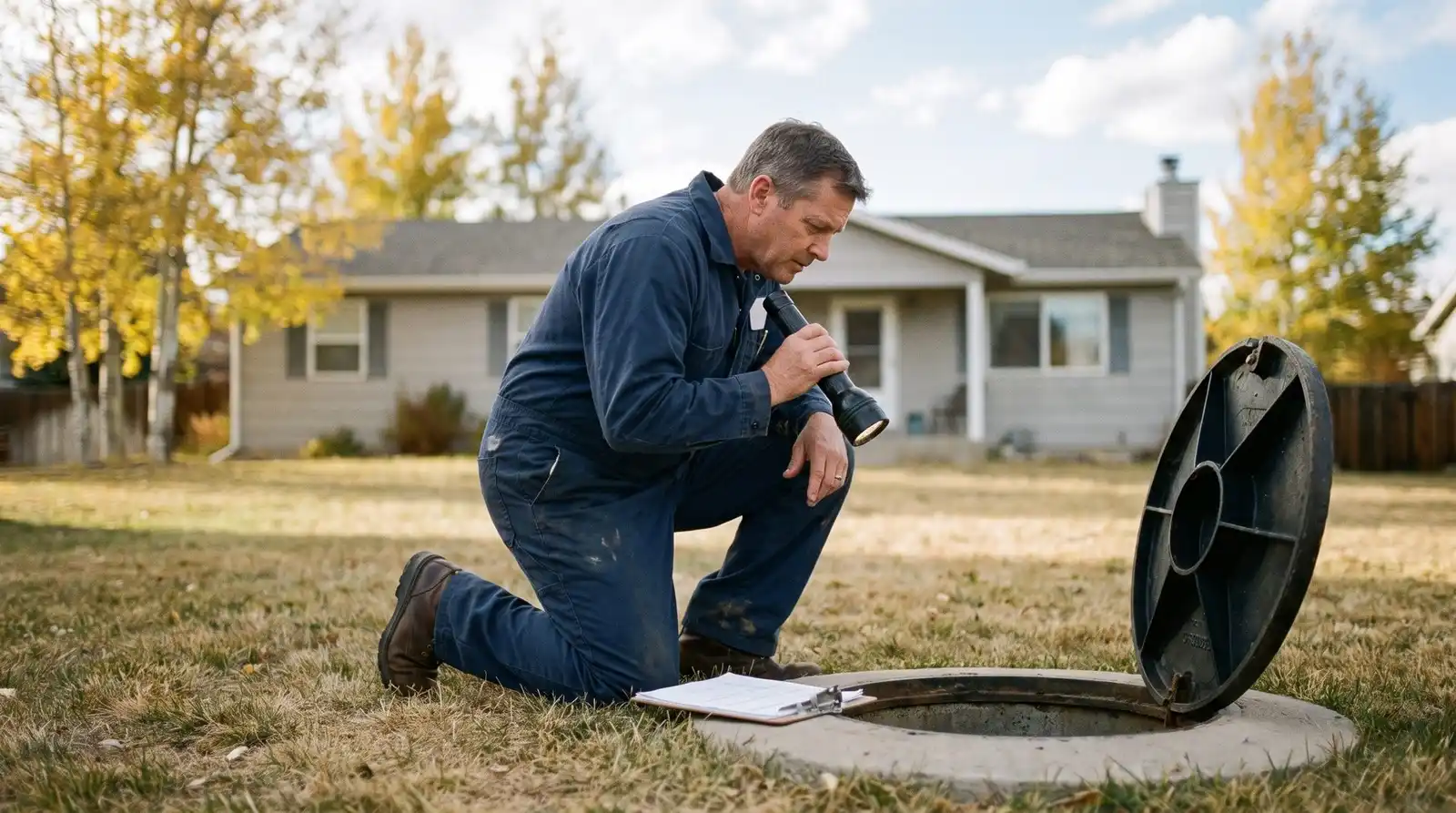
A septic tank inspection is a documented evaluation of the tank, the baffles, the effluent filter, the liquid level, and how the drain field responds to flow. Affordable Septic Pumping inspects systems across Denver and the Colorado Front Range for homeowners, buyers, sellers, agents, and county use permit transfers, and you get findings in writing. Call 720-427-7557.
Get Your Free Quote!
Licensing, experience, and credentials
The situation
Four situations put an inspection on the calendar. A property is selling and the buyer, the lender, or the county wants the system documented. A homeowner is seeing symptoms and needs to know whether the tank, the line, or the field is the problem. A buyer is looking at a home with an unknown system and no records. Or a contractor is planning work and needs the current condition on paper before quoting.
The transaction case is the most common one we get called for. Septic inspection for a home sale walks through the sequence, and what happens during a septic home sale inspection in Colorado covers the visit itself. If you are on the buying side, read buying a home with a septic system first.
The symptom case is different. If drains are slow, the yard smells, or a wet patch has appeared, an inspection tells you which component failed instead of guessing. Drain field failure signs and a high water level in the septic tank are the two findings that change a transaction most.
The unknown system case starts earlier than you think. If nobody can find the tank, we locate it first through septic system locating and troubleshooting, and finding septic records in Colorado counties covers how to pull the original permit and as built drawing.

How the job runs

Where a county permit and as built drawing exist, we start there. Knowing the design tank size, the field layout, and the install date changes what we look for on site.
A real inspection opens the tank. Where the tank has an inlet and an outlet access, both get opened, because a single lid only shows half the story.
Sludge depth tells you the maintenance history. The liquid level tells you something else entirely. A level above the outlet invert means the effluent is not leaving the tank the way it should.
Transfer and full inspections normally include pumping, because the inlet baffle, the outlet baffle or tee, and the tank walls cannot be evaluated through a full tank.
Inlet baffle, outlet baffle or tee, effluent filter, lids, risers, and any pump, float, or alarm equipment. Each one gets a condition note. [Effluent filters](/effluent-filter), [baffles](/septic-baffle-repair), and [risers and lids](/septic-tank-risers-and-lids) are the three that most often need work.
The surface gets walked for wet spots, odor, settling, and unusually lush growth. Then we watch the liquid come back into the drawn down tank. Fast, clean refill from the house is normal. Liquid pushing back from the outlet side is not.
You get the findings in writing, formatted for whoever needs them, along with a plain language explanation of what should be repaired now and what can wait.
A pump out is maintenance. Its job is to remove solids and restore working capacity, and the technician reports anything obvious he notices along the way. An inspection is an evaluation. Its job is to document the condition of every component and produce a report that a buyer, a lender, or a county will accept.
The two overlap because you often cannot inspect properly without pumping. That is why a transfer inspection normally includes the pump out in scope. If your tank is simply due for service and there is no transaction, a straight septic tank pump out is the right and cheaper call. The comparison table above lays out where the three inspection types diverge.
Requirements are set at the county level in Colorado, not statewide, so the answer depends on where the parcel sits. Several Denver area counties require an inspection and an onsite wastewater use permit when a property with a septic system changes ownership, and the accepted report format is county specific.
We keep a page per county so you can check yours before you list: Adams, Arapahoe, Douglas, Jefferson, Elbert, Weld, Clear Creek, and Park. Transfer inspection requirements by county compares them side by side.
Confirm the current requirement with the county health department for the parcel address before you rely on any summary, including ours. Rules and forms change. Septic use permit transfer covers the paperwork side, and Denver area septic use permit counties is the plain language version.
Findings sort into three buckets, and knowing which bucket a line item belongs in is most of the negotiation.
An inspection reports what the system is doing on the day we are there. It is not a warranty against future failure, and it does not include the repairs it identifies. Interior house plumbing is outside the scope, and so is any excavation to expose buried field components that are not reasonably accessible. If the tank cannot be located, locating is a separate service that happens first. Where a repair is identified, we quote it separately so you can compare it against other bids without pressure.
Why us
What it costs
Price depends on the inspection type, whether the tank needs pumping as part of the visit, the tank size, how accessible the lids are, whether risers are installed, and the drive to your property. A transfer inspection with a pump out on a large tank with buried lids is a different job from a maintenance check on a tank with risers at grade. We do not post a flat rate because the scope genuinely varies. Call 720-427-7557 with the property address and your closing date and you get a real number. Septic inspection cost in Denver breaks the variables down, and our septic service cost page covers the rest of the menu.
Questions
Keep going
Routine pump outs on a schedule that fits your household size.
Learn more about Septic Tank PumpingBaffles, filters, risers, lines, and drain field problems.
Learn more about Septic System RepairFind a buried tank and trace a symptom back to its real cause.
Learn more about Locating and TroubleshootingGuides on inspection scope, county use permits, and what a septic finding does to a transaction.
Family Owned & Operated. Call 720-427-7557 or send the form and we will get back to you with a straight answer.