Septic Tank Pumping
Routine pump outs on a schedule that fits your household size.
Learn more about Septic Tank Pumping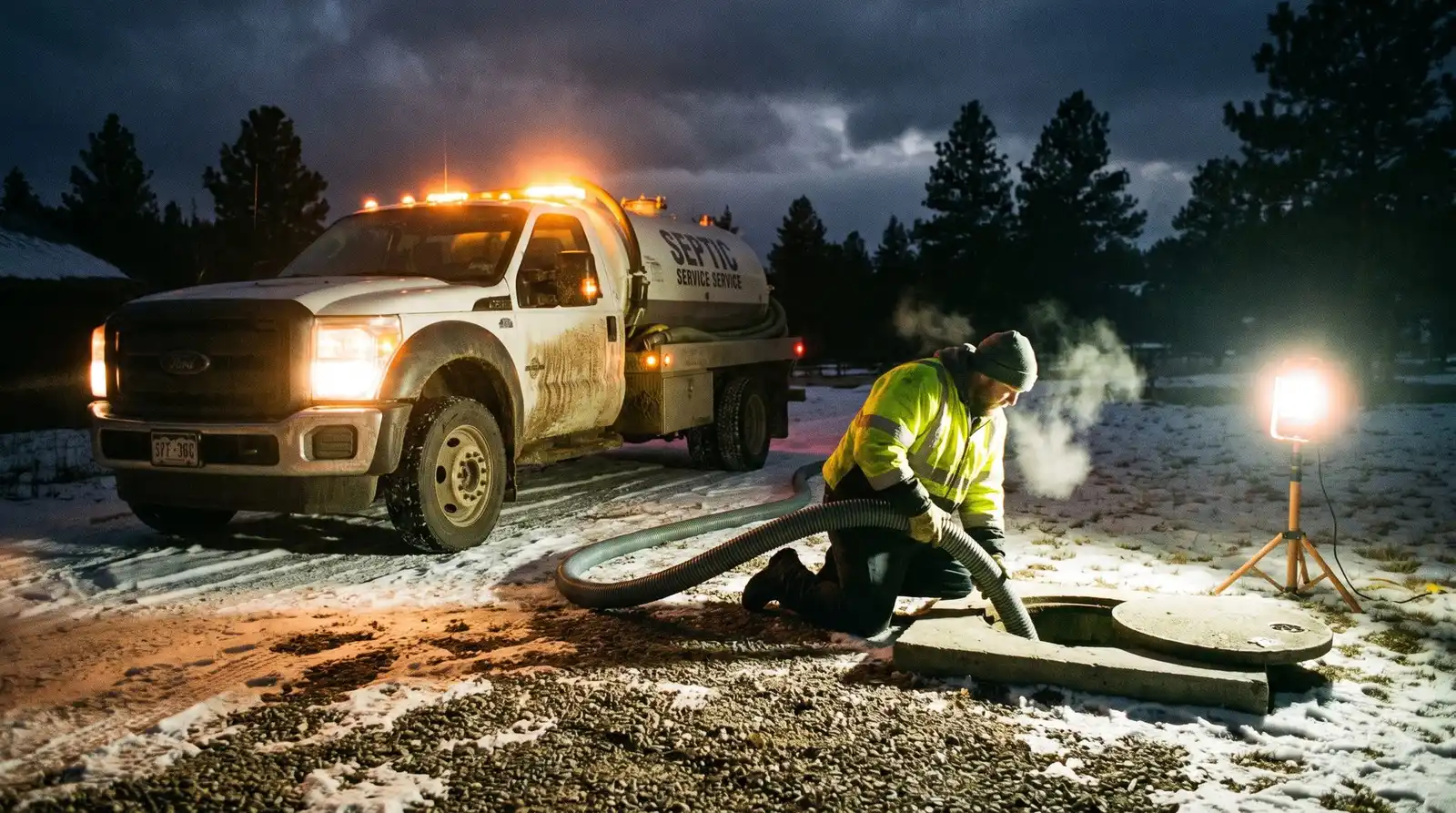
A septic emergency is any situation where waste is entering the building, surfacing in the yard, or about to. It means the system has stopped moving effluent and every gallon that goes down a drain makes it worse. Stop using water, keep people and pets off any surfaced sewage, and call Affordable Septic Pumping at 720-427-7557. We work Denver and the Colorado Front Range and we have been doing it for over 20 years.
Get Your Free Quote!
Licensing, experience, and credentials
The situation
Waste coming back into the house through a floor drain, a shower, or the lowest toilet. Sewage standing on the ground over the tank or the field. Every drain in the house stopped at once. A septic alarm sounding with the liquid level climbing. Any of these is a today problem, not a next week problem.
Things that are urgent but usually not middle of the night. One slow fixture, a faint odor that comes and goes, or a soft spot over the field that has not broken through. Those need attention soon and they are warning you, but they are not the same category. Slow drains: septic problem or plumbing clog helps sort the single fixture case.
Read the specific symptom you have. Septic backing up into the house, a septic tank overflowing, effluent surfacing over the field, a septic alarm going off, standing water near the septic tank, or a frozen septic line in winter.
Colorado weather makes two of these seasonal. Heavy rain and rapid snowmelt saturate the soil around a drain field and can push a marginal system into failure with no warning, and heavy rain and snowmelt septic backups in Colorado explains why. At altitude, a shallow or poorly insulated line can freeze and stop flow completely.

How the job runs

No flushing, no showers, no laundry, no dishwasher. This is not a suggestion. A full load of laundry can push a marginal backup into a flooded basement.
Rope off or fence any wet area over the tank or field. Raw effluent is a health hazard, and children and animals are the ones who find it first.
Drain openers, bleach, and enzyme products will not clear a full tank or a blocked line, and they make the situation more hazardous for the crew that has to work in it.
In a dosed or lift station system, running a pump into a blocked field can make things worse. Call us before you touch a breaker so we can tell you what the system is doing.
What you are seeing, when it started, when the tank was last pumped, whether the ground has been wet, and whether you know where the tank and lids are. It changes what we bring.
Move vehicles off the driveway, unlock gates, and pen up dogs. Access is the most common reason a visit takes longer than it should.
We draw the tank down, which stops the backup. Then we find out why it happened, because a pump out on a system with a real fault only buys days.
In our experience across the Front Range, emergencies cluster into a short list of causes, and knowing which one you have determines whether the fix is cheap or expensive.
The damage scales with volume. A tank that is at the outlet invert has no reserve, so everything that leaves the house has to go somewhere, and the lowest opening in your plumbing is the path of least resistance. That is usually a basement floor drain or a ground floor shower.
Sewage inside a building is a remediation problem, not just a plumbing problem. Drywall, flooring, and stored belongings absorb it, and the cost of cleanup routinely dwarfs the cost of the septic service that would have prevented it. Water restraint is free and it works immediately.
Outside, continued loading of a saturated field pushes effluent laterally and to the surface across a wider area. That can compromise soil beyond the original field footprint, which matters later because it narrows where a replacement field can be sited. Septic repair versus replacement in Colorado covers what that decision looks like.
Emergencies are almost always the visible end of something that was building for a long time. The prevention list is short and it is genuinely effective.
Pump on an interval set from measured sludge depth rather than a guess, service the effluent filter, keep vehicles and structures off the drain field, keep roots and downspouts away from it, and watch what goes down the drain. What not to flush into a septic system is the list that saves the most systems, and pumping before winter in Colorado is the seasonal move that prevents the worst timed calls we take.
If the emergency turned up a real fault, fix it now while the tank is open and the ground is already disturbed. Septic system repair covers what that involves.
If the blockage is inside the building rather than in the onsite system, that is interior plumbing and our sister company Afford-A-Rooter Plumbing is the right call. A single fixture backing up while every other drain in the house runs normally usually points that direction. If a home is on a municipal sewer connection rather than a septic system, the problem is the sewer lateral, not a tank. We also do not perform sewage remediation or restoration inside a building. We stop the source and get the system moving again, and a restoration contractor handles what got contaminated.
Why us
What it costs
The variables are the same as any pump out plus the timing. Tank size, how full it is, whether the lids are accessible or buried, whether risers are installed, drive distance, and whether the visit falls outside normal scheduled hours. Any repair the diagnosis turns up is quoted separately so you are not signing a blank check under pressure. We are not going to post a flat emergency rate, because the honest answer is that it depends on what we find and how hard it is to reach. Call 720-427-7557, tell us what is happening, and we will tell you what the visit involves. Our septic service cost page covers the standard menu.
Questions
Keep going
Routine pump outs on a schedule that fits your household size.
Learn more about Septic Tank PumpingBaffles, filters, risers, lines, and drain field problems.
Learn more about Septic System RepairFind a buried tank and trace a symptom back to its real cause.
Learn more about Locating and TroubleshootingGuides that explain what the symptom is telling you and how fast you need to act.
Family Owned & Operated, serving Denver and the Front Range for over 20 years. Call 720-427-7557 now.