
This guide is part of Septic Service Cost. For the service itself, see our full septic service cost guide.
The cost to locate a septic tank in Denver depends on how hard the tank is to find. Affordable Septic Pumping prices locating from how much of the system has to be found, whether records exist, lot size, ground conditions, and how deep the tank and lines sit. It fits within our full septic service cost guide.
| Cost factor | Keeps the price down | Pushes the price up |
|---|---|---|
| Records | County permit or as built with distances | No records for the property |
| How much to find | Tank and lids only | Tank, lids, and the full line run |
| Lot size | Small suburban lot | Large lot or acreage |
| Ground | Open lawn that probes easily | Hardscape, rocky soil, or regraded yard |
| Depth | Shallow tank and lines | Tank and lines buried deep |
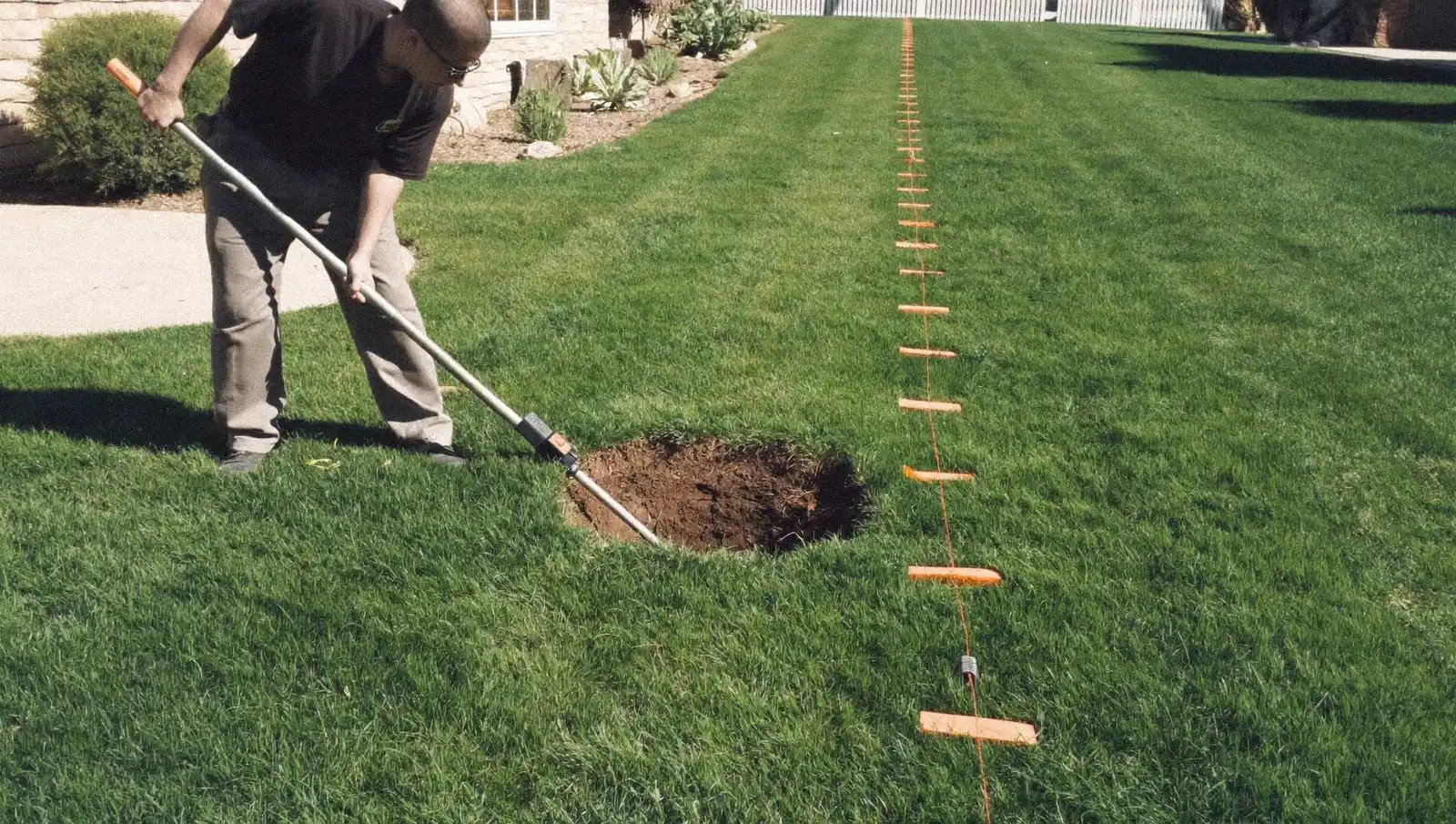
Septic locating Septic locating finds a buried septic tank, its access lids, and the lines running to and from it, then marks those positions so the system can be serviced.
A tank that cannot be found cannot be pumped, inspected, or repaired. Locating is the step that unlocks every other service.
What drives the cost to locate a septic tank?
Four things drive septic locating cost around Denver. How much of the system has to be found comes first. Then come whether a permit record or as built exists, the lot size and ground conditions, and how deep the tank and lines sit. Each one changes how long the crew probes and traces before the lids turn up.
- How much of the system you need found. The tank and lids alone take less time than the full line run.
- Records. A drawing with distances from the house corners can cut the search to minutes.
- Lot size and ground. Open lawn probes easily. Decks, patios, regrading, and rocky soil slow the work.
- Depth. Deeper tanks and lines take more care to confirm and expose.
Records make the biggest difference to the bill. Before you call, check our guide to finding septic records in Colorado counties. A permit file with a tank location is the cheapest locating tool there is.
What is included when you pay for septic locating?
A septic locating visit covers probing and electronic locating of the tank, the lids, and the lines, plus marking what is found. The crew also gives you a read on the fault behind any symptom you called about. Heavy excavation, repairs, and pumping are separate, though pumping can be added to the same visit once the lids are open.
| Item | Part of locating? | Notes |
|---|---|---|
| Checking the county record | Yes | Done first, before anyone probes |
| Probing and electronic locating | Yes | Tank, lids, and lines |
| Marking what is found | Yes | Measured from fixed points on the house |
| Read on the fault behind a symptom | Yes | So the right repair gets quoted |
| Pumping the tank | Only if added | Scheduled once the lids are open |
| Heavy excavation and repairs | No | Quoted separately |
The full scope is on our septic system locating and troubleshooting page. If you are comparing locating with other line items on a sale, our guide to septic inspection cost in Denver explains how the inspection itself is priced.
Can you find a septic tank yourself before paying for locating?
Sometimes. Find where the main drain leaves the house, look for settling or a patch of grass that grows differently, and check the county permit record. Those steps cost nothing and can narrow the search. Avoid digging blind with a shovel or a machine, because a struck lid or line turns a locating visit into a repair.
Our guide on how to find a septic tank lid lists the free checks in more detail. If those come up empty, a locating visit is usually cheaper than the damage a guess can do.
How do you avoid paying to locate the tank again?
Mark it and raise it. Lids nobody can find also slow down a backup, as our guide to emergency versus scheduled septic pumping explains. Keep the measurements from the locating visit with your house records, and consider risers so the lids sit at grade from then on. Risers remove the search and the digging from every future pump out, cleaning, or inspection. For owners staying in the home, that change pays back over time.
Our guide to septic riser cost in Colorado covers what goes into that price. If the tank is also overdue, a septic tank cleaning in the Denver area can be planned for the same visit once the lids are found.
What to expect when you hire Affordable Septic Pumping
Hiring Affordable Septic Pumping to locate a septic tank in the Denver area follows a set order. We pull the records first, read the property, and probe along the line before any digging. Then the crew exposes the lids by hand, marks everything from fixed points, and tells you what it found and what comes next.
- Call with the property address, any records you have, and the reason you need the tank found.
- We check the county permit record and find where the line leaves the house.
- The crew reads the ground and probes along the projected line, tracing the line itself where probing is unclear.
- The access lids are exposed by hand so nothing gets struck.
- Tank and lid positions are measured from fixed points, and risers are offered so the lids stay at grade.
Family owned and operated, Affordable Septic Pumping has spent more than twenty years finding buried tanks across Denver and the Front Range from our Westminster base. Locating comes first on any property where the lids cannot be found, so if you are working toward a closing date, call early and build it into the schedule.
Get a septic locating quote
Call Affordable Septic Pumping at 720-964-1034 with the property address and whether any records exist. We locate septic tanks across Denver, Aurora, Lakewood, Littleton, Westminster, Arvada, Thornton, Brighton, and the rest of the Front Range. You can also book through our septic tank locating service page.