This guide is part of Commercial and Grease Trap. For the service itself, see our commercial grease trap services.
The difference between a grease trap and a grease interceptor is size and location. A grease trap is a small unit inside the kitchen, often under a sink. A grease interceptor is a large tank buried outside. Busier kitchens usually need an interceptor. Both are part of our commercial grease trap services for Denver restaurants and commercial kitchens.
Grease interceptor A grease interceptor is a large in-ground tank, usually concrete, that slows kitchen wastewater so fats, oils, and grease float and food solids settle before the water reaches the sewer.
Interceptors handle far more flow than an indoor trap, which is why utilities often require them for higher volume kitchens.
What is a grease trap?
A grease trap is a small hydromechanical unit installed inside the kitchen, often under or next to a three compartment sink. Baffles slow the water so grease rises and is held back. Traps hold a small volume, so they fill fast and need frequent cleaning. They suit smaller kitchens with lighter grease loads.
What is a grease interceptor?
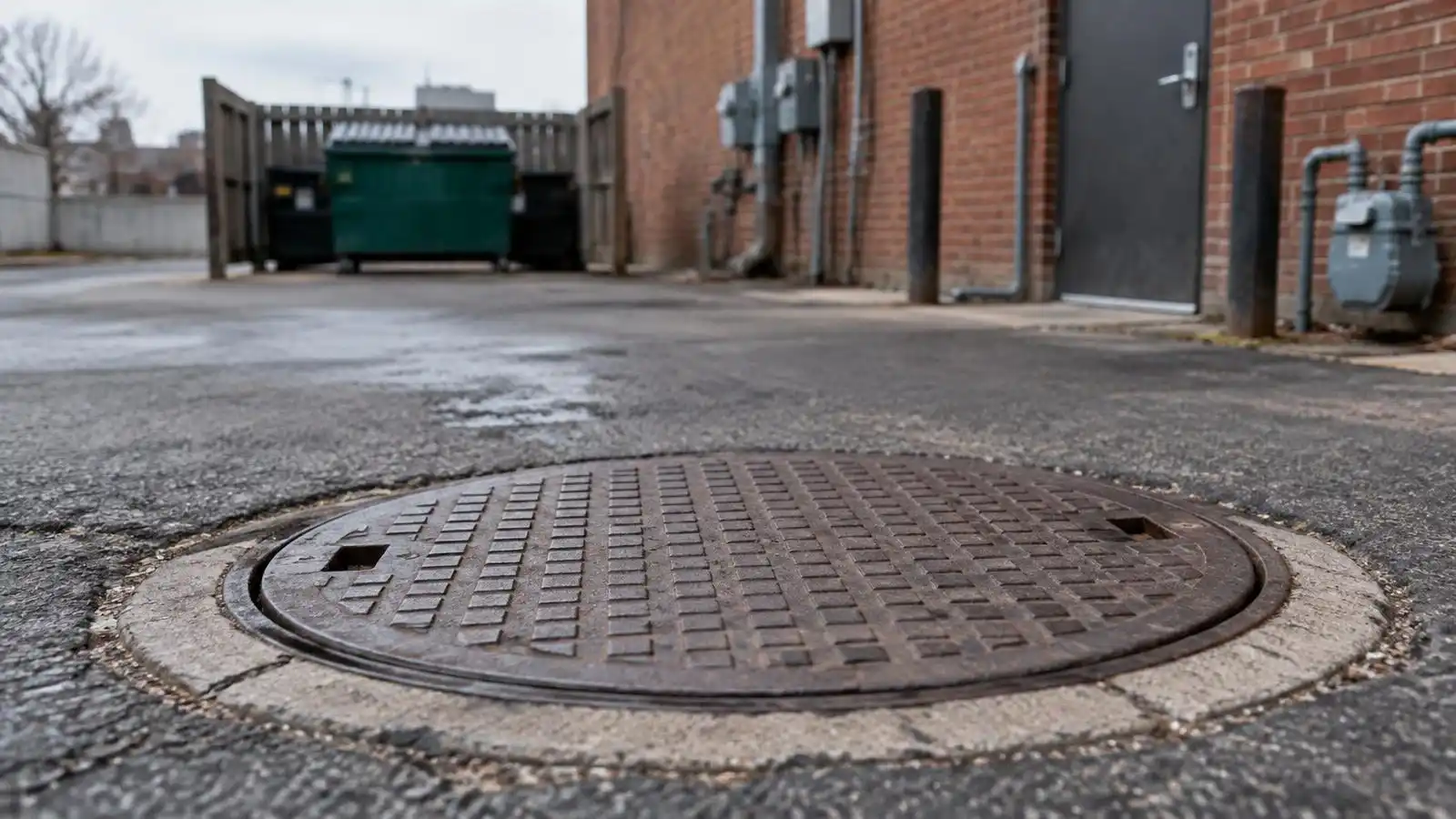
A grease interceptor is a large gravity tank set in the ground outside the building, often under a parking lot or service lane. Wastewater from several fixtures flows in, and time and gravity separate grease and solids from the water. Its size lets it hold far more grease between service visits than an indoor trap.
| Feature | Grease trap | Grease interceptor |
|---|---|---|
| Location | Inside, under or near a sink | Outside, buried in the ground |
| How it separates | Hydromechanical baffles and flow control | Gravity and retention time in a large tank |
| Typical kitchen | Smaller or lighter volume kitchens | Busier, higher volume kitchens |
| Fixtures served | Often one or a few fixtures | Often several fixtures or the whole kitchen line |
| Service style | Frequent small cleanings | Less frequent pumping at larger volume |
| Access | Inside the kitchen | Manhole lids outside the building |
How do kitchen volume and fixtures drive the choice?
The more meals, the more fixtures, and the heavier the grease, the more likely a kitchen needs an interceptor. Fryers, woks, grills, and heavy dish loads push grease volume up. A coffee shop with light prep may be served by a trap. A full service restaurant often is not. Sizing is based on flow and fixtures.
- How many meals the kitchen serves on a busy day.
- How many sinks, floor drains, and dish machines connect.
- Whether the menu leans on fried, grilled, or sauce heavy food.
- Whether the space is new construction or an existing building.
- How much room there is inside and outside for equipment.
Who decides which one a Denver kitchen needs?
The local wastewater utility and the plumbing code set the requirement, not the restaurant owner or the service company. Rules differ between jurisdictions around Denver and can change with a remodel or a change of use. Confirm with your wastewater utility and your building department before you buy equipment or sign a lease.
If a new unit is required, our grease trap installation service in Denver can help you plan around what the utility asks for.
How is maintenance different for a trap and an interceptor?
An indoor trap holds little, so it needs frequent cleaning, often on a short schedule set by the kitchen's volume. An interceptor holds much more, so service visits are spaced further apart but involve pumping a large volume with a truck. Both need cleaning before grease and solids take up too much of the unit.
For interceptors, scheduled grease trap pumping in Denver is the core of the service. Our post on how often a Denver restaurant should clean its grease trap covers how to set a schedule. When you book, our guide to grease trap pumping vs cleaning for Denver restaurants explains which visit fits your unit.
Why do cleaning records matter?
Cleaning records show the utility and health inspectors that the unit is being serviced. Many utilities expect a kitchen to keep them on site and produce them on request. A clear log also helps you spot when a unit is filling faster than normal, which often points to a change in menu, staff habits, or volume.
- Date of each cleaning or pumping visit.
- Who did the service.
- What was found, such as grease depth or damage.
- Any repairs made or recommended.
- Where the waste was taken, if your utility asks for it.
What else should a kitchen operator plan for?
Plan for access, scheduling, and staff habits. Interceptor lids must stay reachable for the truck. Service is easier outside of peak hours. Scraping plates into the trash and keeping fryer oil out of drains cuts grease load for either unit. Restaurants sharing a building may also share an interceptor, so know who manages it.
Our restaurant grease trap service in Denver and our commercial and restaurant septic work cover kitchens on sewer and on septic.
Final takeaway
Small, lighter kitchens often use a grease trap. Busier kitchens usually need a grease interceptor. Your utility and the plumbing code make the final call, and either unit needs steady service and good records. To get yours on a schedule, start with our commercial grease trap services.