This guide is part of Septic Pumping and Maintenance. For the service itself, see our septic tank pumping service in Denver.
Pump a Colorado cabin septic tank when scum and sludge approach about a quarter of the tank volume. For a cabin used only part of the year, that can stretch past the three to five year norm, and a busy rental can need it sooner. Affordable Septic Pumping measures the layers and sets the date through our septic tank pumping service in Denver.
| How the cabin is used | What it does to the tank | Pumping approach |
|---|---|---|
| A few weekends each summer | Light load with long idle gaps | Measure each visit; the interval can run long |
| Holiday weekends with a full house | Sudden surges after weeks of rest | Check before the busy weekend, not after |
| Occupied most of the summer | Close to a full time load for months | Treat it like a full time home in season |
| Short term rental turnover | Heavy, frequent use by guests | Shorten the interval and post guest guidance |
| Closed for winter | No warm water moving through the system | Pump before closing after a heavy season |
Use based pumping schedule A use based pumping schedule sets the next pump out from how much the tank is actually used and how fast solids build up, measured at each visit, instead of from a fixed number of years.
A cabin's use swings from empty to full. A calendar built for year round living will be wrong in one direction or the other.
Why does a cabin septic tank fill differently than a full time home?
A cabin septic tank fills differently because use comes in bursts. Bacteria in the tank need a steady supply of wastewater. When a cabin sits closed, that activity slows and solids settle and compact. Then a full house arrives for a weekend and the tank takes a surge it has not seen in weeks.
Mountain ground adds its own pressure. Many cabin sites sit on shallow soil over rock, so there is less soil below the field to treat effluent. Our page on cabin and seasonal septic service covers how these systems behave across the year.
How often should you pump a cabin septic tank?
Pump a cabin septic tank when the scum and sludge layers approach about a quarter of the tank volume. Park County, one of the mountain counties we serve, sets no fixed pumping calendar and notes that seasonal cabins can stretch longer than the three to five year norm. Full time mountain homes usually match it. Measuring is the only way to know.
The usual factors still apply on top of the cabin pattern. Household size, guests, and a garbage disposal all change the pace. Our guide to how often to pump a septic tank in Colorado explains how those factors stack up for a full time home, and the same logic applies to the weeks a cabin is full.
- How many nights the cabin is occupied each season.
- How many people stay on a typical visit and on the busiest weekends.
- Whether the cabin is rented to guests.
- Whether there is a garbage disposal or a washing machine.
- The measured scum and sludge depth at the last pump out.
When in the season should a cabin septic tank be pumped?
The best times to service a cabin septic tank are at the start of the season and before closing. An inspection before the first busy weekend catches a full tank, a clogged filter, or a failed pump while it is still an easy fix. Our guide on how often to clean a septic effluent filter explains why a busy cabin season loads the filter fast. Pumping before closing after a heavy season keeps a full tank from sitting through winter.
Mid summer is a good time to check where you stand. If the cabin has been full for weeks and the tank was already close to due in spring, getting on the schedule before late summer leaves room before the drives and lids get harder to reach. Our page on septic risers and lids explains how raised lids make cabin visits quicker.
What should cabin guests know about the septic system?
Cabin guests should know the house is on a septic system and what that means for the drains. Wipes, grease, and a string of laundry loads on one day are the usual trouble. A short note posted by the toilet and the sink prevents most rental backups.
- Only toilet paper goes in the toilet. No wipes, even ones labeled flushable.
- No cooking grease or oil down the kitchen sink.
- Spread laundry loads across the stay instead of running them all at once.
- Keep vehicles and trailers off the drain field.
- Call the owner right away if a drain slows or an alarm sounds.
Our guide on what not to flush into a septic system is the longer version worth printing for the cabin. Summer watering matters too, and our guide to watering a lawn over a septic drain field covers it. Watch for the warning signs in signs your septic tank needs pumping.
What to expect when you hire Affordable Septic Pumping
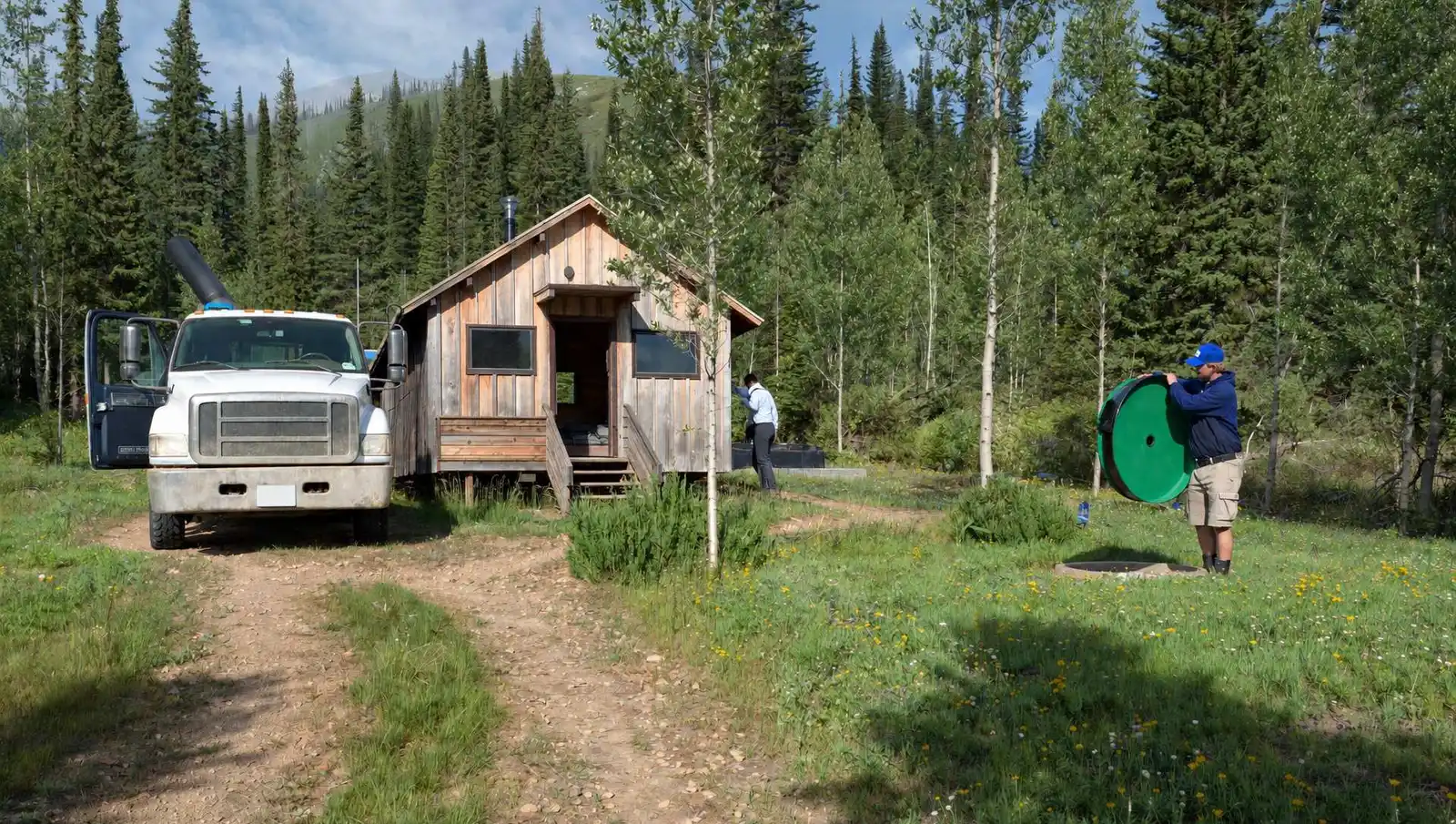
Hiring Affordable Septic Pumping for a cabin follows a set order. We ask how the cabin is used, how to reach it, and when it was last pumped. The crew locates and opens the tank, measures the layers, pumps it, and checks the parts. You get a recommended next date based on how the cabin is actually used.
- Call with the cabin address, how often it is used, and the drive and gate details.
- We schedule around your visits or a rental gap.
- The crew locates and opens the tank and measures scum and sludge depth.
- The tank is pumped, and the baffles, outlet, and effluent filter are checked.
- You get the findings and a next service date set from use, which we can email if you are not at the cabin.
Affordable Septic Pumping is family owned and operated in Westminster and has served the Colorado Front Range for more than twenty years, from the foothills along US 285 to the mountain communities west of the metro.
Set a pumping schedule for your cabin
Call Affordable Septic Pumping at 720-964-1034 to get your cabin on a use based schedule. We serve Denver and the Colorado Front Range, including foothills and mountain cabins. Booking also works through our septic tank pumping in Denver page.