This guide is part of Septic Pumping and Maintenance. For the service itself, see our septic tank pumping service in Denver.
Yes. A garbage disposal can raise septic pumping costs over time because it sends more food waste and solids into the tank, which can shorten the time between pump-outs and increase the chance that the system will need attention sooner. The disposal itself does not automatically damage a septic system, but it can make the tank work harder than a similar home that keeps food waste out of the drain.
Garbage disposal effect on septic cost. A garbage disposal raises septic pumping cost indirectly, by increasing the solids entering the tank so that routine pump-outs are needed more often rather than by making a single visit more expensive.
The more often the tank needs pumping, the more the homeowner spends over the life of the system.
If you are already dealing with an overdue tank or kitchen-related septic symptoms, you can review our septic tank pumping service in Denver page here.
Why does a garbage disposal affect septic pumping costs?
A garbage disposal affects septic pumping costs because it increases the amount of solids entering the septic tank. Food waste breaks down much more slowly than many homeowners expect, so it can build up as sludge and scum and reduce the time between routine pump-outs.
That means the disposal often changes cost indirectly rather than by adding a special line item to one service visit. The more often the tank needs pumping, the more the homeowner spends over time. Our septic service cost guide explains how the individual visits are priced.
| Disposal-use pattern | What happens in the tank | Cost effect over time | Why it changes pumping needs |
|---|---|---|---|
| No garbage disposal or very limited use | Less food waste enters the tank | Lower long-term pumping pressure | Fewer added solids accumulate |
| Occasional disposal use | Some extra solids enter the tank | Mild increase in maintenance risk | The system has to process more kitchen waste |
| Frequent disposal use | More food scraps accumulate as sludge and scum | Higher long-term pumping cost | The tank may need service sooner |
| Heavy disposal use plus grease or coffee grounds | Solids and scum buildup can accelerate | Highest avoidable pumping cost risk | The system is handling more waste than it was meant to |
The most useful way to think about it is this: the disposal does not usually make one pump-out dramatically more expensive, but it often increases how often pump-outs are needed.
Does EPA say garbage disposals affect septic pumping frequency?
Yes. EPA says using an in-sink garbage disposal unit can affect how often you need to pump your septic tank. EPA also says that if a garbage disposal is used, the tank will need to be pumped more frequently.
That is one of the clearest authoritative answers on this topic. The issue is not guesswork. It is that food waste adds to the solids load the tank has to manage.
Does a garbage disposal raise the price of one pumping visit?
Usually not by itself. Most pumping companies still price a routine visit based on tank size, access, sludge level, and service conditions rather than asking whether the home has a disposal. The bigger financial effect is that frequent disposal use can make the tank due sooner.
In other words, the disposal usually changes the maintenance cycle more than the price tag on one ordinary appointment.
How much sooner can pumping be needed?
The exact timing depends on household size, water use, and how heavily the disposal is used, but the general pattern is clear: more solids in the tank usually mean a shorter interval between pump-outs. EPA and university guidance both tie pumping frequency to tank size, household size, water use, and whether a garbage disposal is used.
That is why one home may still do fine with a disposal if use is light, while another may shorten the maintenance cycle noticeably if food scraps go down the drain every day.
Are some kitchen habits worse than the disposal itself?
Yes. A disposal used lightly is usually less of a problem than a disposal used as a full-time trash can. Grease, coffee grounds, fibrous food waste, and large amounts of scraps can push the tank harder than small, occasional disposal use.
This matters because homeowners often blame the appliance itself when the real issue is how much and what kind of waste it is handling.
Use this checklist to decide whether disposal habits may be raising septic costs:
- The home uses a garbage disposal daily.
- Large amounts of food scraps are rinsed into the sink.
- Grease or oils also go down the drain.
- Coffee grounds are regularly washed into the sink.
- The tank seems to need pumping sooner than expected.
- The household has noticed kitchen drains slowing after heavy use.
If kitchen waste habits may already have shortened the maintenance window, you can review our septic tank pumping service in Denver page here.
Can a garbage disposal contribute to drain field problems too?
It can. EPA says food waste from garbage disposals can accumulate as scum and sludge, and if a large amount of water enters the tank or the tank fills up with solids, those solids can be pushed into the drain field. That can clog pipes and increase the thickness of the biomat in the drain field, also called the leach field.
That is why disposal use is not only about pumping frequency. In a stressed system, too many solids can also make downstream problems more likely.
Does every septic home need to remove the garbage disposal?
No. A disposal does not automatically mean the septic system will fail. Many septic homes use them without immediate problems. The more realistic question is whether the household is willing to be more conservative about food waste and accept that pumping may need to happen more often.
This is a maintenance tradeoff, not always a strict yes-or-no rule.
| Situation | Better fit for a disposal | Worse fit for a disposal |
|---|---|---|
| Household habits | Light, careful use with minimal food waste | Heavy daily use with lots of scraps |
| Kitchen waste habits | Grease and grounds kept out of drains | Sink used like a trash can |
| Pumping discipline | Household keeps to a conservative service schedule | Household already stretches pumping too long |
| System margin | Stable, well-maintained septic system | System already showing slow drains or backups |
What does this look like in real life?
A realistic example is a smaller household that uses the disposal only for light rinsing and keeps grease, coffee grounds, and larger scraps out of the sink. That home may still have a septic-safe routine as long as pumping is not delayed.
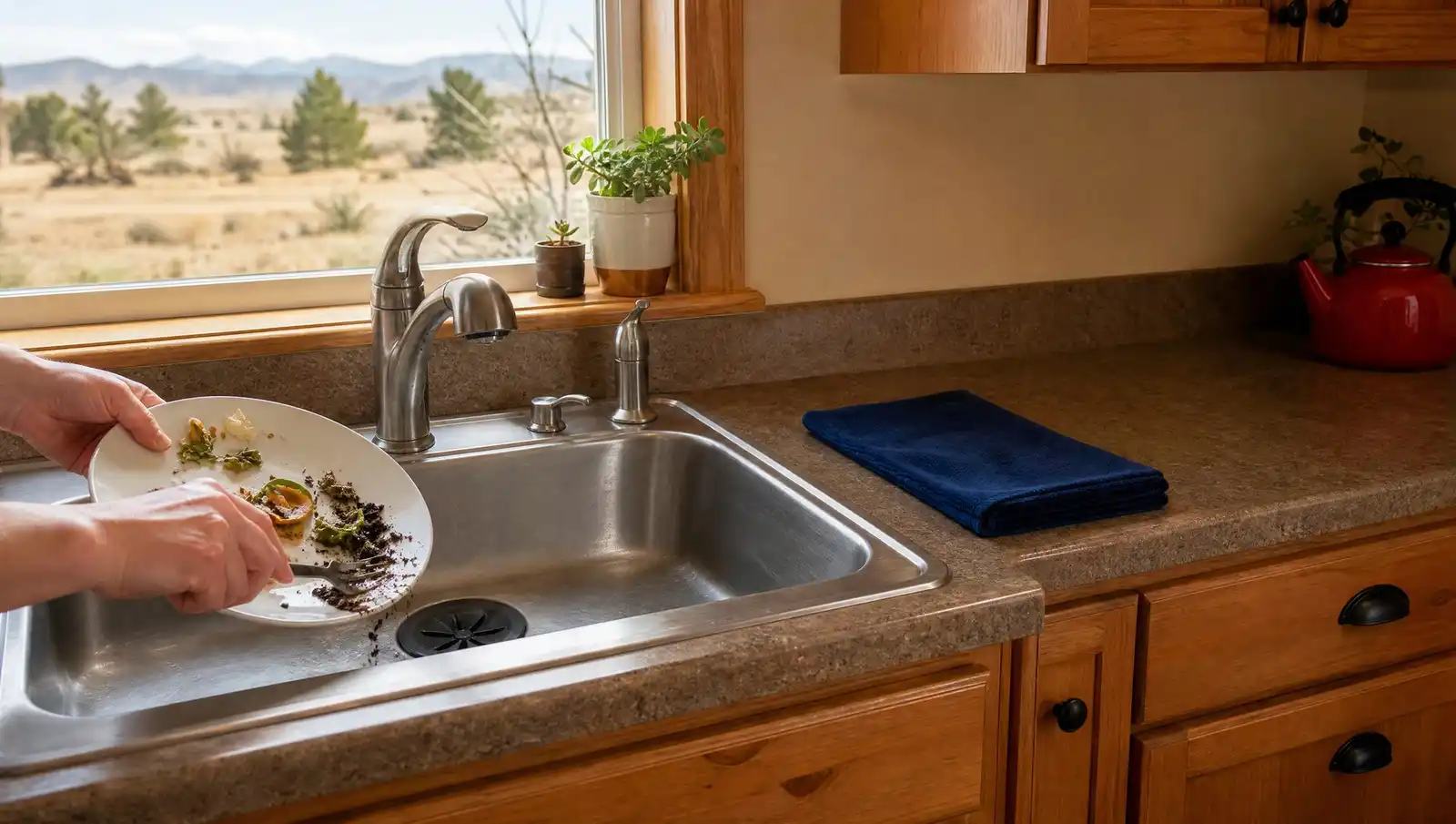
Another common example is a busy family kitchen that sends vegetable scraps, coffee grounds, and plate waste into the disposal every day. Even if the plumbing seems fine at first, that habit pattern can shorten the pumping interval and increase long-term maintenance cost.
What mistakes do homeowners make with garbage disposals and septic systems?
The most common mistake is assuming that if the disposal grinds the food, the septic system can handle it without consequences. Grinding changes the size of the waste, but it does not remove the solids load from the tank.
Another mistake is focusing only on the disposal and ignoring grease, oils, and other kitchen waste habits that often make the problem worse.
Red flags to watch for
Be cautious if the household uses the disposal heavily, if the pumping interval seems to be getting shorter, or if kitchen drains slow down after food-heavy use. It is also worth rethinking disposal habits if the system already has a history of slow drains, odors, or overdue maintenance.
Those patterns usually point to avoidable solids buildup.
What is the best next step if a home with septic uses a garbage disposal?
The best next step is to reduce disposal use, keep grease and food solids out of the drain, and base the pumping schedule on how the household actually uses the kitchen rather than on a generic calendar alone. That usually works better than waiting for the system to prove the point with a backup.
Kitchen habits are only one part of system care, and our septic services page walks through the rest of it.
Final takeaway
A garbage disposal can raise septic pumping costs over time because it adds solids to the tank and can shorten the interval between pump-outs. The real cost effect is usually not one dramatically higher service visit. It is more frequent maintenance and less margin for bad kitchen habits.
If kitchen waste habits may already be stressing the system, call Affordable Septic Pumping at 720-427-7557. This is a family run shop out of Westminster covering Denver and the Colorado Front Range.