This guide is part of Septic Problems and Diagnostics. For the service itself, see our full range of septic services.
Yes. Heavy rain or rapid snowmelt can cause septic backup in Colorado when the soil around the drain field becomes saturated and can no longer absorb wastewater the way it normally should. That extra groundwater pressure can slow the system down, push sewage back toward the house, and make existing septic weaknesses show up faster.
Soil saturation Soil saturation is the condition where the soil around a drain field is already full of water, so it cannot absorb and treat additional wastewater at the normal rate.
The drain field depends on unsaturated soil, so once the ground is saturated the system loses its ability to move effluent away from the tank efficiently.
If a backup is happening right now, or symptoms keep returning, you can review our emergency septic service page here. If wastewater is already coming back inside, our page on septic backing up into the house covers what to do first.
Why do heavy rain and snowmelt affect septic systems?
Heavy rain and snowmelt affect septic systems because the drain field depends on unsaturated soil to absorb and treat wastewater. When the soil is already full of water, the system loses its ability to move effluent away from the tank efficiently.
That does not mean every storm causes a septic failure. It does mean wet-weather conditions can expose a system that is already overdue for pumping, partly restricted, poorly drained, or nearing field failure.
| Wet-weather condition | What happens to the system | Why backup risk rises | What it can look like |
|---|---|---|---|
| Heavy rain saturates the soil | The drain field cannot absorb wastewater as efficiently | Effluent has nowhere to go as quickly | Slow drains, gurgling, sluggish toilets |
| Rapid snowmelt raises groundwater | Water pressure builds around the tank and field | The system loses treatment and dispersal capacity | Odors, soggy yard, slower drainage |
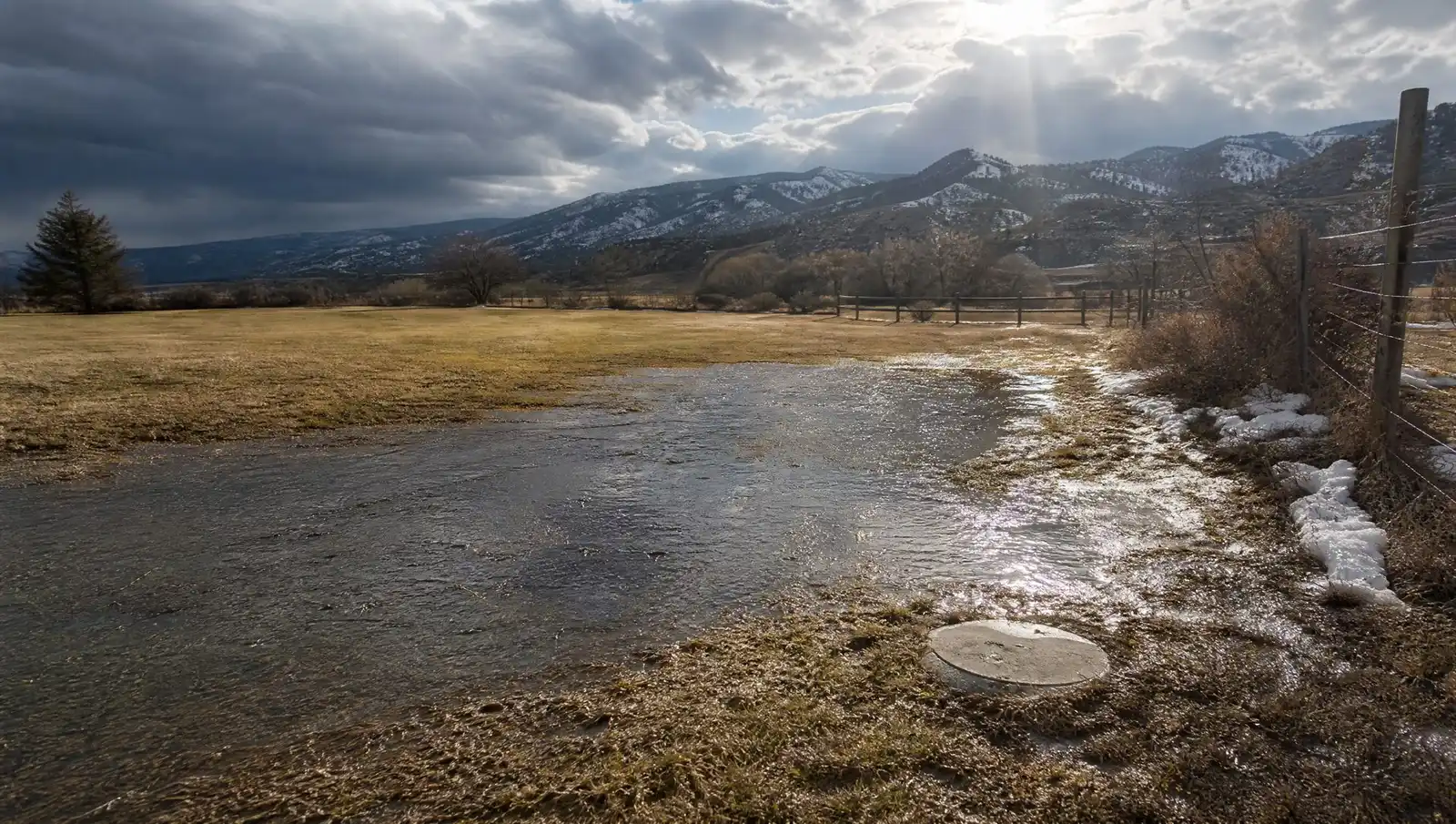
| Saturated yard adds surface runoff near the field | Extra water reaches the septic area | The system gets overloaded from outside water, not just household use | Wet spots or standing water near the field |
| Existing septic issue meets wet weather | A borderline problem gets worse quickly | Rain and snowmelt remove the system’s remaining buffer | Backup into tubs, showers, or floor drains |
| Flooding reaches the field or tank area | The system may be unusable until soil water levels drop | Wastewater cannot move through flooded soil normally | Indoor backup or surfacing wastewater |
The most useful way to think about it is this: rain and snowmelt do not have to damage the septic system directly to make it stop working properly.
Can Colorado snowmelt really cause septic problems?
Yes. Snowmelt can cause the same kind of soil saturation problems that heavy rain does, especially when melt happens quickly or when the ground is already holding a lot of water. In Colorado, spring thaw can create a temporary high-water condition that slows down wastewater movement through the field.
That is why some homeowners notice the worst septic symptoms in spring rather than during the driest part of the year. The problem is often not the snow itself. It is what happens when that water enters the soil around the system. A high water level in the septic tank is one of the clearest signs that effluent is not leaving the tank.
What symptoms usually show up first after heavy rain or snowmelt?
The first symptoms are often slow drains, toilet gurgling, sewage odors, wet ground near the septic area, or water backing up into lower fixtures. These are the same warning signs public-health guidance associates with septic malfunction, but they may become much more noticeable during wet weather.
A wet-weather backup often looks like a normal septic problem at first. The difference is the timing. If the symptoms begin or get worse after rain or rapid thaw, groundwater and saturated soil may be part of the cause. Our page on standing water near the septic tank covers that outdoor symptom in more detail.
Does wet weather mean the septic tank needs pumping?
Not always, but wet weather often reveals when the tank is already overdue or when the system has little margin left. If the tank has gone too long without service, heavy rain or snowmelt can make the symptoms appear sooner because the field and tank are both under more stress.
That is why pumping may still be part of the solution even when the weather is the trigger. The key is not to assume that weather alone is the whole answer.
Use this checklist when septic symptoms appear after heavy rain or snowmelt:
- Did the problem start right after a storm or rapid thaw?
- Are several drains or toilets affected at the same time?
- Is there a sewage smell or soggy ground near the septic area?
- Has it been several years since the tank was pumped?
- Does the problem get worse after laundry or heavy water use?
- Is surface runoff draining toward the tank or field area?
If routine maintenance may be part of the issue, you can review our septic tank pumping page here.
When is the weather the main problem, and when is it exposing a bigger one?
Weather is often the trigger, but not always the root cause. A well-maintained system on a suitable site may slow down temporarily during very wet conditions and then recover as the soil dries. A system with an overdue tank, a stressed drain field, or a hidden line problem is more likely to turn that same weather event into a real backup.
This is why two neighboring homes can have very different outcomes after the same storm. The weather is shared, but the system condition is not.
| Situation | Most likely first explanation | Why | What it does not rule out |
|---|---|---|---|
| Symptoms appear only during extreme wet weather and then fade | Temporary wet-soil overload | Saturated soil can temporarily slow the field | A system already operating with little reserve |
| Symptoms begin after wet weather and keep getting worse | Weather exposed a larger septic issue | The system may already have been stressed | Need for pumping, troubleshooting, or repair |
| Backup happens after heavy water use during snowmelt or rain | Combined household load plus saturated field | The system is handling both indoor and outdoor water stress | A blocked line or overdue tank |
| Yard stays wet and smells after the weather clears | Ongoing field or component problem | The system is not rebounding after conditions improve | Repair-focused evaluation |
What should you do during a wet-weather septic problem?
The best immediate step is to reduce water use and avoid overwhelming the system while the soil is saturated. Spacing out showers, laundry, and dishwasher use can reduce the load going into a stressed system.
If flooding or severe saturation is involved, EPA says not to use the sewage system until water in the soil absorption field is lower than the water level around the house. EPA also says only trained specialists should clean or repair septic tanks because they may contain dangerous gases.
How can you reduce the risk before the next storm or spring thaw?
The best prevention steps are to keep the tank on a regular pumping schedule, direct gutters and runoff away from the drain field, avoid compacting the septic area, and pay attention to grading that sends water toward the system. Wet-weather backups are often worse when outside water is already being funneled toward the field.
That makes prevention partly a maintenance issue and partly a drainage issue.
What does this look like in real life?
A realistic example is a homeowner in Littleton who only notices gurgling drains and sluggish toilets after a fast spring thaw. The system may be experiencing temporary groundwater pressure, but if the tank is also overdue, wet weather can be the event that finally reveals it.
Another common example is a homeowner in Evergreen with a yard that slopes toward the drain field. After a heavy rain, the lower fixtures slow down and the septic area turns soggy. In that case, runoff control and septic evaluation may both matter because the weather is stressing a vulnerable area of the property.
What mistakes do homeowners make with rain- or snowmelt-related backups?
The most common mistake is assuming the problem will solve itself just because the storm passes. Sometimes it will ease as the soil dries, but wet weather can also expose a tank that is overdue, a field that is failing, or drainage around the system that needs correction.
Another mistake is continuing normal or heavy water use while the system is clearly struggling. That can turn a slow-drain warning into a full backup.
Red flags to watch for
Be cautious if the backup affects multiple fixtures, if the yard stays wet after the weather clears, if the septic area smells like sewage, or if the same problem returns every spring or after major storms. It is also worth moving quickly if wastewater is surfacing or entering the home.
Those are signs the issue may be more than a temporary weather slowdown.
What is the best next step if wet weather caused septic symptoms?
The best next step is to reduce water use, see whether the symptoms are tied to overdue maintenance or a bigger system issue, and get the system evaluated if the problem is severe or does not improve as conditions dry out. That usually leads to a better result than waiting for the next storm to answer the question again.
For everything a system needs outside of a wet weather event, see our septic services page.
Final takeaway
Heavy rain and rapid snowmelt can absolutely cause septic backup in Colorado by saturating the soil around the drain field and reducing the system’s ability to move wastewater normally. Sometimes the effect is temporary. Other times, wet weather is the warning sign that the septic system was already running out of room for error.
If the symptoms are active now, start with our emergency septic service page. Our family runs this business from Westminster and answers at 720-427-7557.