
This guide is part of Septic Pumping and Maintenance. For the service itself, see our septic tank pumping service in Denver.
Most homeowners schedule a septic pump-out without knowing what to expect once the truck pulls up. That uncertainty is normal. It is not a service you watch happen indoors. Knowing what a technician actually does from the moment they arrive to the moment they leave helps you prepare your property, ask the right questions, and understand what you are paying for.
Septic pump-out. A septic pump-out is a maintenance visit in which a vacuum truck removes the liquid effluent, bottom sludge, and top scum layer from a septic tank through the tank access lids.
A thorough pump-out removes the contents of both compartments, not just the liquid layer, which is what protects the system between services.
This walkthrough covers a standard residential pump-out in the Denver metro area: what each step looks like, roughly how long it takes, and what signs during the service might prompt a closer look at your system.
Before the Truck Arrives: What to Have Ready
The most important thing you can do before a pump-out is know where your septic tank lid is. If your lids are buried, the technician will need to locate and uncover them before pumping can begin. That process adds time and, depending on the service company, may add cost.
If your tank has risers already installed, meaning the plastic or concrete extensions that bring the lid up to ground level, the technician can access it quickly without excavation. If it does not, this is often a good time to discuss adding them. Our page on septic tank risers and lids explains what that upgrade typically involves.
Beyond lid access, clear a path for the hose from the street or driveway to the tank area. Service trucks carry vacuum hoses that typically reach 50 to 100 feet, but shorter runs make the job cleaner and faster. Move vehicles, outdoor furniture, or anything else that might be in the way. The technician will also need to park the truck reasonably close, so let them know ahead of time about any low branches, soft soil, or tight turns on your property.
Step 1: Locating and Opening the Tank
The technician begins by confirming the tank location. If you know it, point it out. If you do not, they will look for the inlet pipe from the house, check for depressions or greener patches in the grass, and sometimes use a probe rod to find the tank edge through soft ground. Tanks in Colorado are typically set 12 to 36 inches below grade, though older systems can be deeper.
Once located, any soil or sod over the lid is cleared. If your lid is buried just an inch or two, this is a quick step. If it is well below grade, the technician may need to dig. After the lid is exposed, it is removed carefully. Septic lids can be concrete, plastic, or cast iron depending on the age and type of tank, and some require tools to break a seal or lift safely.
Most standard residential tanks have two access points: one over the inlet compartment and one over the outlet compartment. The technician will typically open both during a thorough pump-out to access the full tank and check the baffle condition at each end.
Step 2: The Pump-Out Itself
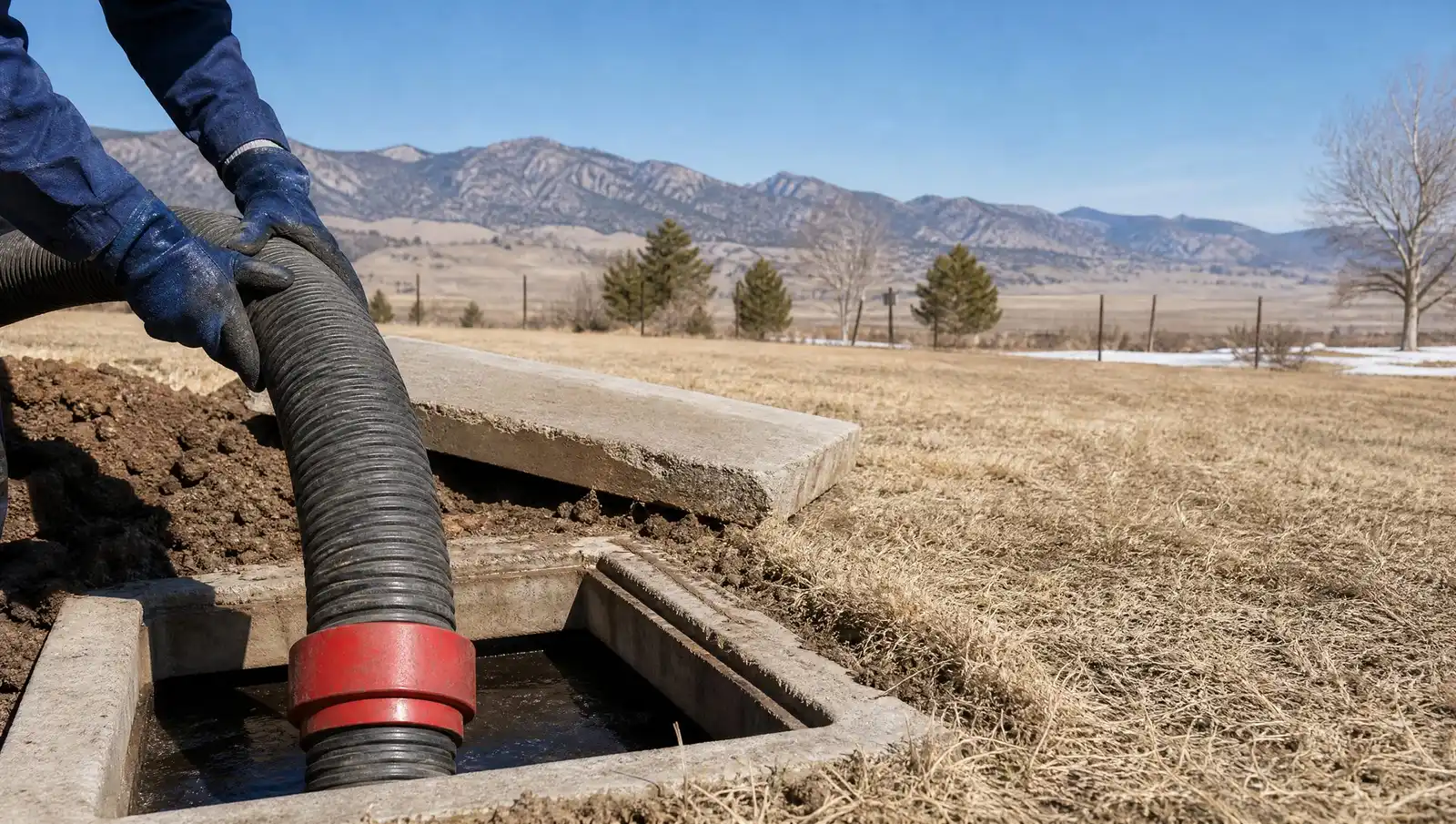
The vacuum hose from the truck is lowered into the tank, and pumping begins. The truck's vacuum system draws out the contents, meaning liquid effluent, sludge on the bottom, and scum layer on top, into the sealed holding tank on the truck. For a typical 1,000- to 1,500-gallon residential tank, this process takes roughly 20 to 45 minutes depending on how full the tank is and the pump rate of the equipment.
A thorough pump-out removes the contents of both compartments. The technician will usually work the hose through the waste to break up solids and ensure the bottom sludge is fully evacuated, not just the liquid layer. This matters because compacted sludge left behind shortens the time until your next service and can stress the outlet baffle. Our septic tank cleaning in Denver page covers what full removal looks like on a service visit.
During pumping, the technician typically watches how the waste is layered. A thick sludge layer relative to the tank's capacity, or evidence of unusually heavy solids, can indicate the tank was overdue or that something is adding extra load, such as a garbage disposal. If you have one, it is worth knowing that garbage disposals can shorten your pumping interval by adding solids the system was not sized to handle at that rate.
Step 3: Visual Inspection of the Tank Interior
Once the tank is empty, a good technician takes a few minutes to inspect what is visible. This is not a certified inspection, which is a separate and more involved service, but a basic visual check can catch obvious problems. They will look at the inlet and outlet baffles to see whether they are intact, cracked, or missing entirely. Baffles are the T-shaped fittings that direct flow in and out of the tank; a failed baffle is one of the more common repair needs found during routine pump-outs.
They will also note any cracks in the visible tank walls, signs of root intrusion, or evidence of backflow from the drain field side. A tank that shows standing effluent above the outlet pipe after pumping, or that refills unusually quickly, can suggest the drain field is saturated or failing. These are the kinds of observations a technician may mention verbally, and it is the right time to ask questions and understand what those signs could mean for your system.
If your system has one, this is also when the effluent filter gets checked and cleaned. If anything warrants closer attention, a video inspection or full system inspection can be scheduled.
Step 4: Closing Up and Documentation
After inspection, the lid is reseated and secured. If the lid was buried, the excavated area is backfilled. Many service companies will mark the lid location with a small flag or stake so you can find it for future service. If risers are not already in place, this is the point where the technician can tell you the lid depth and what riser height would be needed to bring access to grade.
Most companies provide a basic service record noting the date, what was pumped, an estimated tank capacity, and any observations made during the visit. Keep this record, because you will want it when you sell the home, schedule the next service, or need to refer back to what was found. Some counties in the Denver area require documentation of septic service history as part of a property transfer, and having organized records makes that process easier.
How Long Does a Full Pump-Out Take?
For a typical single-family home with an accessible lid at or near grade, plan for 45 minutes to 90 minutes from truck arrival to departure. That window accounts for locating and opening the tank, pumping, a basic visual check, and closing up. If the lid is buried and needs to be dug out, add 30 minutes or more. If the tank is especially large, very full, or has access complications, the job can run longer.
Scheduling is usually straightforward for routine maintenance. Emergency situations, such as a backed-up system, sewage surfacing in the yard, or slow drains throughout the house, are handled differently and often require same-day response. If you are seeing signs that your tank needs pumping right now, do not wait for a routine appointment slot.
What the Service Does Not Include
A standard pump-out is maintenance, not diagnosis. It removes the waste, documents the visit, and catches obvious visual problems, but it does not include a video camera inspection of the drain field lines, a dye test, a percolation test, or the written reports required for a real estate transfer inspection. If you need any of those, they should be scheduled separately and clearly communicated when you book.
It also does not include repairs. If the technician identifies a failed baffle, a cracked lid, or something that needs attention, that work is quoted and scheduled separately. Knowing this in advance helps you understand what a septic pumping quote in Denver typically covers versus what gets added on.
Ready to Schedule?
A routine pump-out is one of the most straightforward things you can do to protect a septic system. Most Colorado homes on septic should be pumped every three to five years, though household size, tank capacity, and what goes down the drain all affect that schedule. If you are not sure when yours was last serviced, or if it has been longer than five years, it is worth a call.
Affordable Septic Pumping serves the Denver metro area and Front Range. Call 720-427-7557 to learn more about what we include in a standard service visit.