
This guide is part of Septic Problems and Diagnostics. For the service itself, see our full range of septic services.
Check the distribution box before you replace a drain field. A box that has settled or plugged sends most of the effluent down one trench, and that trench floods while the rest of the field sits dry. Affordable Septic Pumping levels or replaces the box first for Denver area homes, as part of our full range of septic services.
| What you notice | Points to the distribution box | Points to the drain field |
|---|---|---|
| Where the yard is wet | One stripe or one corner of the field | Wet or spongy ground across most of the field |
| Grass growth | Lush growth over a single trench | Uneven growth over the whole area |
| Odor | Strongest at one spot | Spread across the field |
| Drains in the house | Slow at times, often after heavy water use | Slow most of the time, even with light use |
| What a check finds | A tipped box, sediment, roots, or a crushed outlet | Trenches full of standing effluent and soil that will not take more |
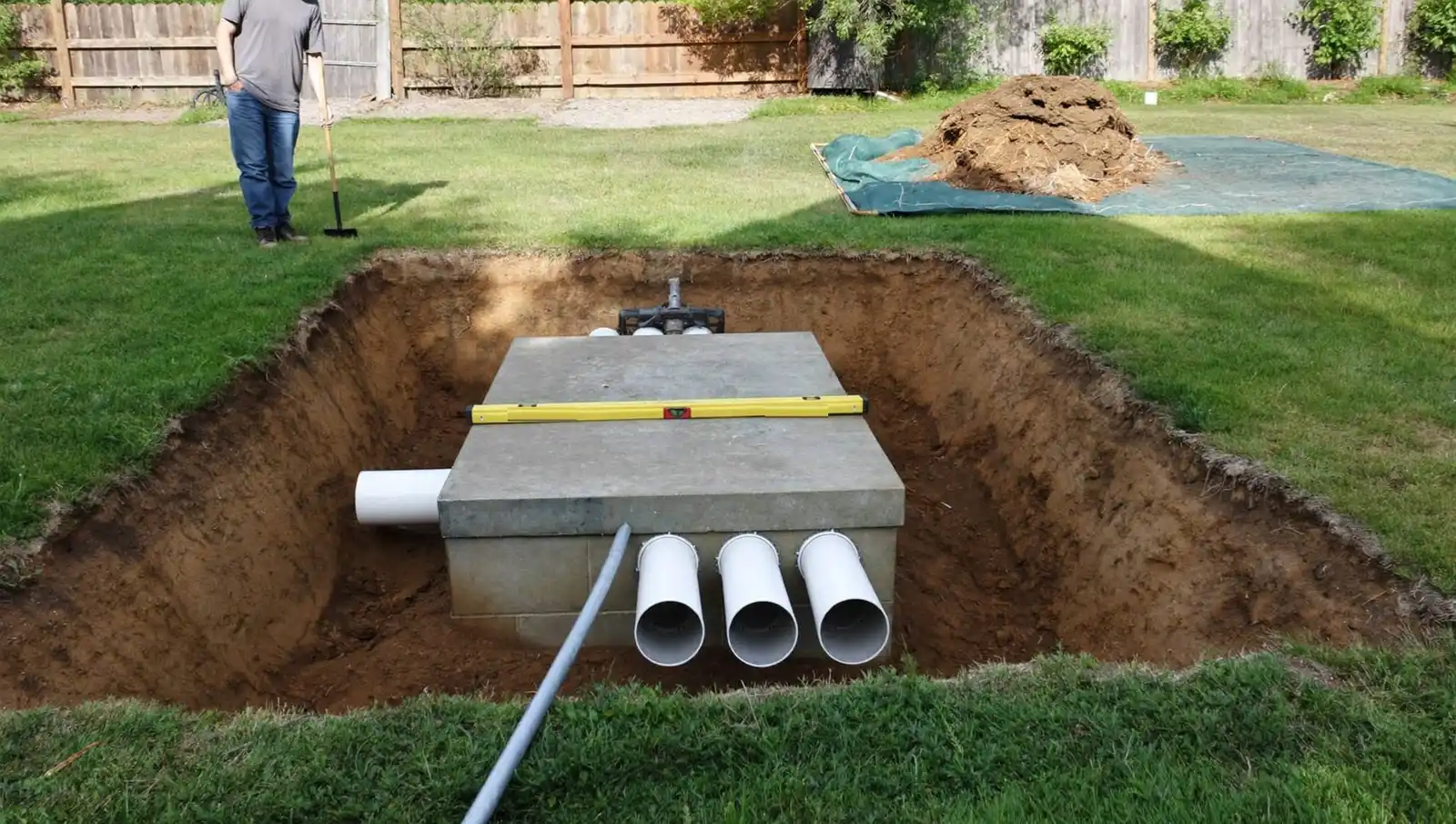
Distribution box A distribution box, often called a D box, is a small concrete or plastic chamber between the septic tank and the drain field. It has one inlet and several outlets, and it splits effluent evenly between the trenches.
Even distribution is what lets every trench share the load. A box that tips sends the flow to its lowest outlet.
What does a septic distribution box do?
A septic distribution box takes the effluent leaving the tank and divides it between the drain field trenches. Each outlet should sit at the same height, so each trench gets a fair share. That balance is what lets the whole field treat wastewater instead of asking one trench to do the work of all of them.
The box is small and buried, so most homeowners never think about it. Our page on the septic distribution box shows where it sits and what service looks like. Our page on the leach field explains how the trenches beyond it are laid out.
How can a bad distribution box look like drain field failure?
A bad distribution box looks like drain field failure because the symptoms land in the same yard. When the box settles, even slightly, most of the flow runs to the low outlet. That one trench gets overloaded and saturated. The result is a wet, smelly stripe and slow drains, while the rest of the field has hardly been used.
- Settling. Frost and soft backfill let the box tip, so the outlets are no longer level.
- Sediment. Solids that escape the tank collect in the box and block one or more outlets.
- Roots. Tree and shrub roots find the joints and fill the outlets.
- Damage. A vehicle or heavy equipment over the box can crack or crush it.
- A blocked outlet line. One lateral plugs, so the box backs up and overflows to the others unevenly.
Each of these is a repair. None of them means the soil itself has given out. If roots are part of the story, our page on roots in a septic line covers what to do about them. If the wet area sits right over the field, see our page on a wet spot over the leach field.
When does a drain field really need replacement?
A drain field needs replacement when the soil across the field has stopped absorbing effluent. That happens when solids have clogged the soil pore space over years, or the field has simply reached the end of its working life. Leveling a box cannot fix that. The test is whether the field recovers once flow is spread evenly again.
Field age is part of the picture. Our guide on how long a septic system lasts in Colorado explains why the field usually wears out before the tank does. Our page on drain field failure signs lists what a field at the end of its life tends to show.
How do distribution box repair and drain field replacement compare?
Distribution box repair and drain field replacement sit at opposite ends of the septic repair scale. Box work is usually a small dig, a re-level or a new box, and a flow check. A new field means excavation, a county permit, design coordination, and a county inspection. That gap is why the box is checked first.
| Factor | Distribution box repair | Drain field replacement |
|---|---|---|
| Scope of work | Expose the box, level or replace it, confirm even flow | Excavate and build a new soil treatment area |
| County permit | Depends on the county and the work | Required by the county |
| Yard disturbance | A small area around the box | The full footprint of the new field |
| What drives the price | Box depth, how hard it is to find, re-level or replace, outlet damage | Field size, soil, design, permit, and site restoration |
| Best for | One trench overloaded while the soil elsewhere still works | Soil across the field no longer absorbing |
Our guide on septic repair vs replacement in Colorado walks through the same decision for the whole system. For the larger job, our guide to drain field replacement cost in Colorado explains what drives that price. You can also read about drain field replacement as a service.
Is early summer a good time to check a distribution box?
Early summer is a practical time to check a distribution box. Spring moisture has had a chance to drain, so a stripe that is still wet in a dry stretch of June stands out. The ground is easier to dig than frozen winter soil, and a repair can be backfilled and settled before the next freeze.
Before you call, rule out the simple things. Make sure no irrigation zone or downspout is soaking that part of the yard. Then cut back on laundry and long showers and watch whether the wet area shrinks. If it stays wet in dry weather or smells like sewage, it is time for a look.
What to expect when you hire Affordable Septic Pumping
Hiring Affordable Septic Pumping to sort out a wet drain field follows a set order. We start with the tank, because solids leaving the tank are often why the box plugged. Then the crew finds and opens the box, reads what it shows, and tells you whether the fix is the box or the field.
- Call and describe the wet area, the odor, and when the tank was last pumped.
- The crew locates the tank and the box, pumps the tank, and checks the baffles and outlet.
- The distribution box is exposed and checked for level, sediment, roots, and damage.
- A settled box is re-set on a stable base. A cracked or crushed box is replaced.
- Water is run to confirm each outlet takes its share, and you get a plain answer on the field.
Affordable Septic Pumping is a family owned crew based in Westminster, with more than twenty years on septic systems across Denver and the Front Range. Our septic system repair in Denver page explains the component repairs we handle, from boxes to baffles to filters.
Book a distribution box and drain field check
Call Affordable Septic Pumping at 720-964-1034 if one part of your drain field stays wet or smells. We serve homes across Denver and the Front Range from Westminster, including foothills properties and rural acreage. You can also start on our septic system repair in Denver page.