
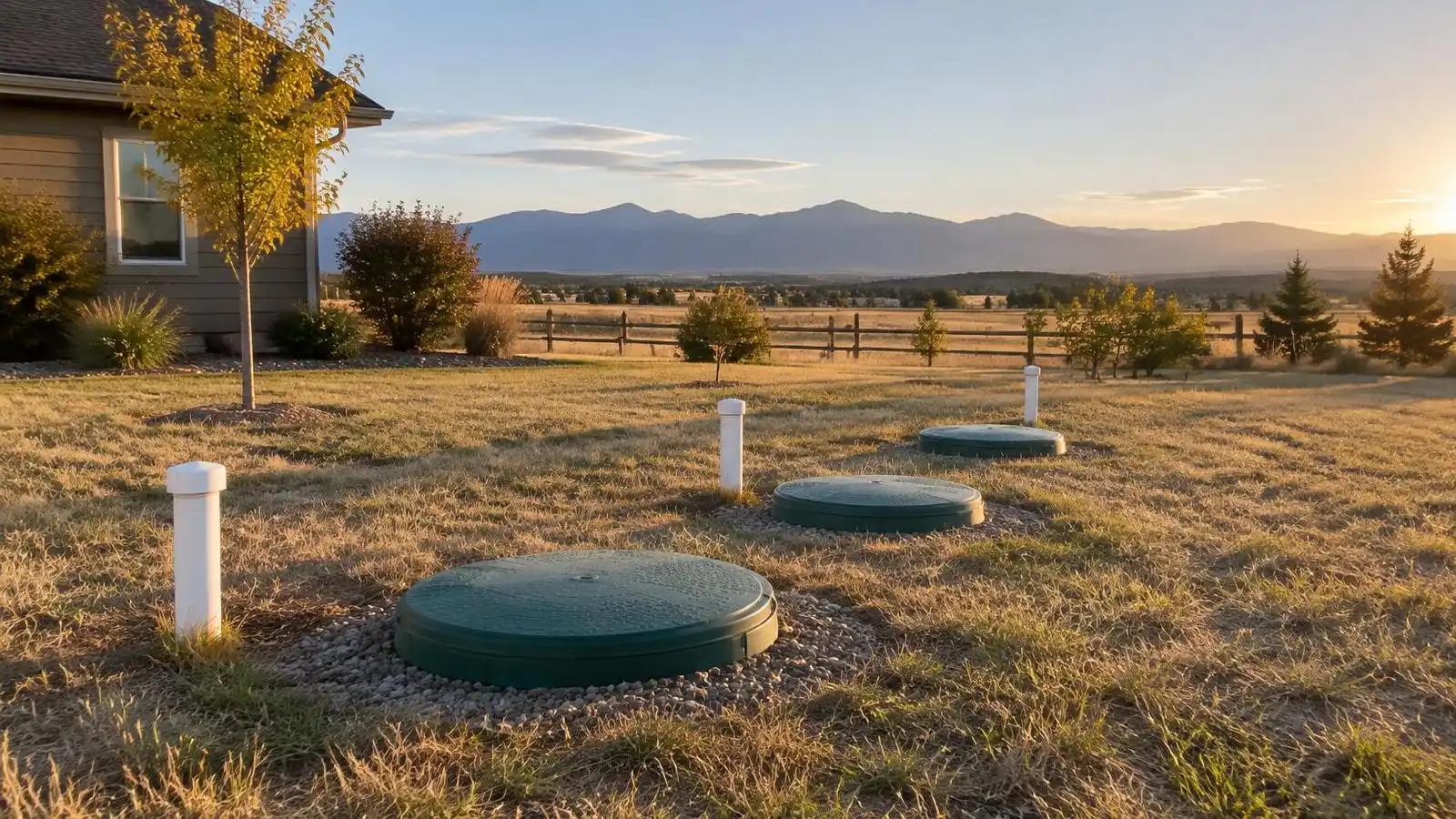
This guide is part of Septic Problems and Diagnostics. For the service itself, see our full range of septic services.
Sand filter septic system maintenance comes down to three habits: pump the septic tank on schedule, keep the effluent filter clean, and make sure the dosing pump and alarm work. Do those and the sand bed can do its job for many years. A sand filter is one of the engineered systems covered under our full range of septic services, and it needs a little more attention than a standard drain field.
Sand filter septic system A sand filter is a lined bed of specified sand that treats septic tank effluent before it reaches the soil. A pump sends small doses of effluent across the top of the bed, and the water is cleaned as it trickles down.
The sand does the treatment that poor or shallow native soil cannot. If solids or grease reach the sand, the bed clogs, so the parts upstream matter as much as the filter.
Why do some Colorado lots need a sand filter?
Some Front Range lots cannot treat effluent with a standard drain field. Tight clay soils absorb water too slowly. High groundwater leaves too little clean soil below the trench. Small lots may not have room for a full field. A sand filter adds the treatment the site is missing before the water reaches the ground.
The county reviews the site and approves the design, so the choice is set when the system is permitted. If you are not sure what you have, the system records or an inspection will tell you. You can read more about how we service this design on our sand filter system page.
How does a sand filter septic system work?
Wastewater flows from the house into the septic tank, where solids settle out. Clearer effluent passes through an effluent filter into a pump chamber. A dosing pump then sends measured doses across the sand bed. The water trickles down, gets treated by the sand and the bacteria living in it, and drains to the soil.
Small, timed doses are the key. They let the sand rest and breathe between doses, which keeps the bacteria healthy. Floats in the pump chamber tell the pump when to run and trip an alarm if the water rises too high.
| Component | What it does | Warning sign |
|---|---|---|
| Septic tank | Settles solids and floats grease and scum | Overdue pumping, solids near the outlet |
| Effluent filter | Stops fine solids before the pump chamber | Slow drains or backup in the house |
| Pump chamber and floats | Holds effluent and controls when the pump runs | High water alarm, float stuck or tangled |
| Dosing pump | Sends measured doses across the sand bed | Alarm, pump running nonstop, or not at all |
| Distribution lines | Spread each dose evenly over the sand | Wet spots or ponding in one area |
| Sand bed | Treats effluent as it trickles down | Standing water over the filter, odor |
What routine service does a sand filter need?
Routine service starts with pumping the septic tank on a regular schedule so solids never reach the sand. The effluent filter needs cleaning during service visits. The dosing pump, floats, and alarm should be checked so the bed keeps getting small, even doses. Your system permit may list more specific steps.
- Pump the septic tank on schedule, and do not wait for a backup.
- Clean the effluent filter at each service visit.
- Test the high water alarm and confirm it sounds.
- Check that the floats move freely and are not tangled.
- Watch the pump run a cycle and confirm it shuts off.
- Look over the filter surface for standing water or wet spots.
- Keep inspection ports and lids at grade and easy to reach.
- Keep vehicles, sheds, and deep rooted plants off the filter.
Pumping does not touch the sand itself. It protects it. Most of the long term health of a sand filter depends on what the tank and effluent filter keep out of it.
What are the warning signs of a sand filter problem?
The main warning signs are standing water over the filter, a high water alarm, sewage odor near the bed or tank, and slow drains in the house. Any one of them means effluent is not moving the way it should. Calling early often keeps a small pump or filter fix from turning into sand bed damage.
Odor is worth a closer look on its own. Our guide on what to do when your yard smells like sewage near the septic system walks through the common causes. An alarm should never be silenced and ignored. It usually means the pump chamber is filling faster than the pump is emptying it.
Is it a repair or a sand filter rebuild?
Many sand filter problems are repairs. A failed pump, a stuck float, a tripped breaker, a clogged effluent filter, or a plugged distribution line can usually be fixed without touching the sand. A rebuild is typically needed only when the sand media itself is clogged with solids or grease and no longer drains.
The age and history of the system matter too. Our posts on how long a septic system lasts in Colorado and when to repair or replace a septic system cover how to weigh that decision. A service visit that checks each part in order is the honest way to tell which one you are facing.
How is a sand filter different from other engineered systems?
A sand filter is one of several engineered systems used where a standard field will not work. Others treat effluent in different ways, with air, with a raised bed of fill, or both. Each has its own parts and its own service needs, so the care plan depends on which system the county approved for your lot.
If your records point to a different design, see our pages on the aerobic treatment unit and the mound system for how those engineered systems are serviced.
What should I do before calling for service?
Before you call, note what you are seeing and when it started. Check whether the alarm is sounding and whether the pump breaker has tripped. Cut back on water use, such as laundry and long showers, until the system is checked. Keep people and pets off any wet area over the filter.
- Write down the warning sign and when you first noticed it.
- Check the alarm panel and the pump breaker.
- Hold off on laundry, dishwashers, and long showers.
- Keep everyone off wet ground over the filter or tank.
- Find your system records or permit if you have them.
Final takeaway
A sand filter rewards steady care. Keep the tank pumped, the effluent filter clean, and the pump and alarm working, and the sand bed stays healthy. If you are seeing ponding, odor, or an alarm, book a visit with our septic system repair team in Denver.